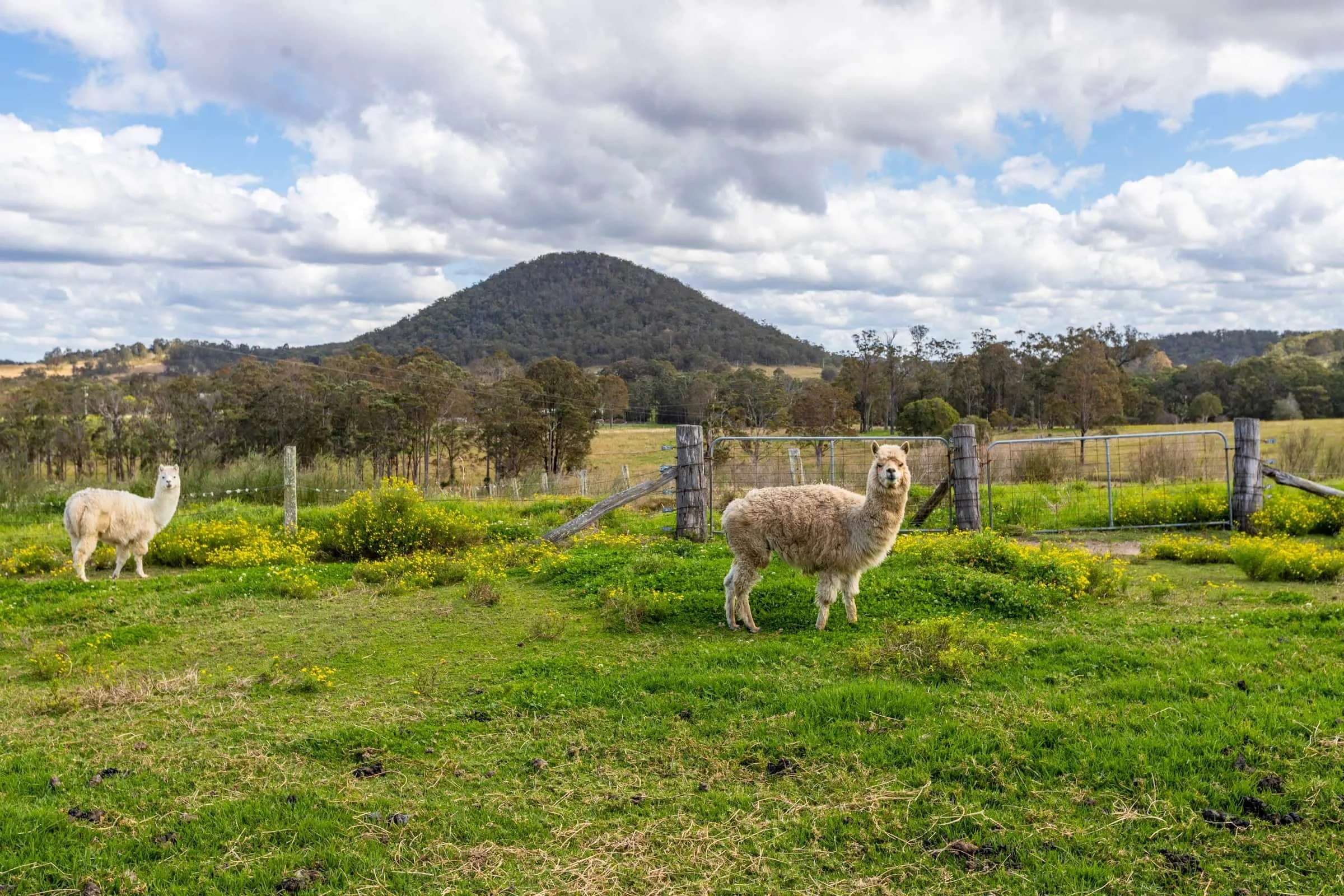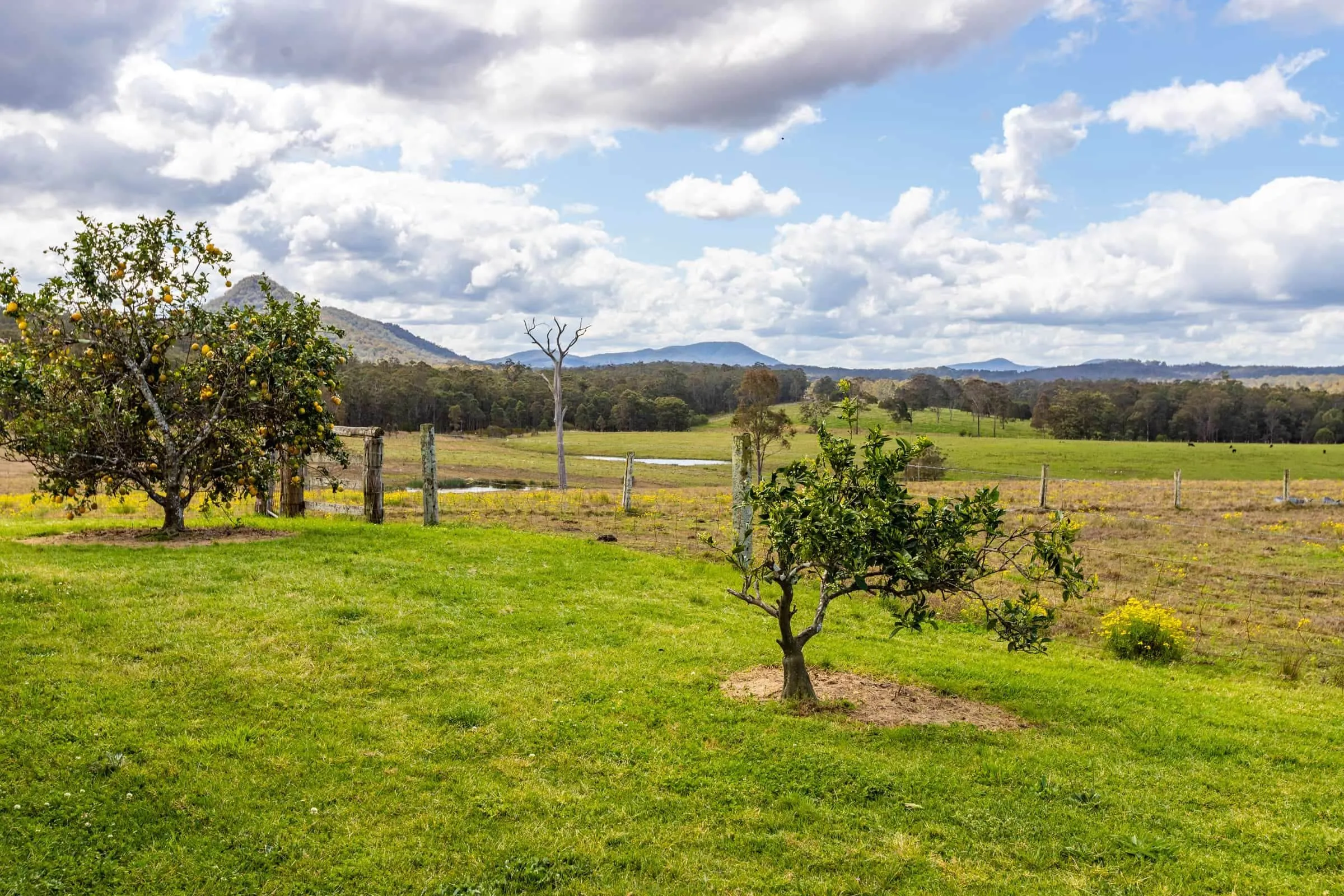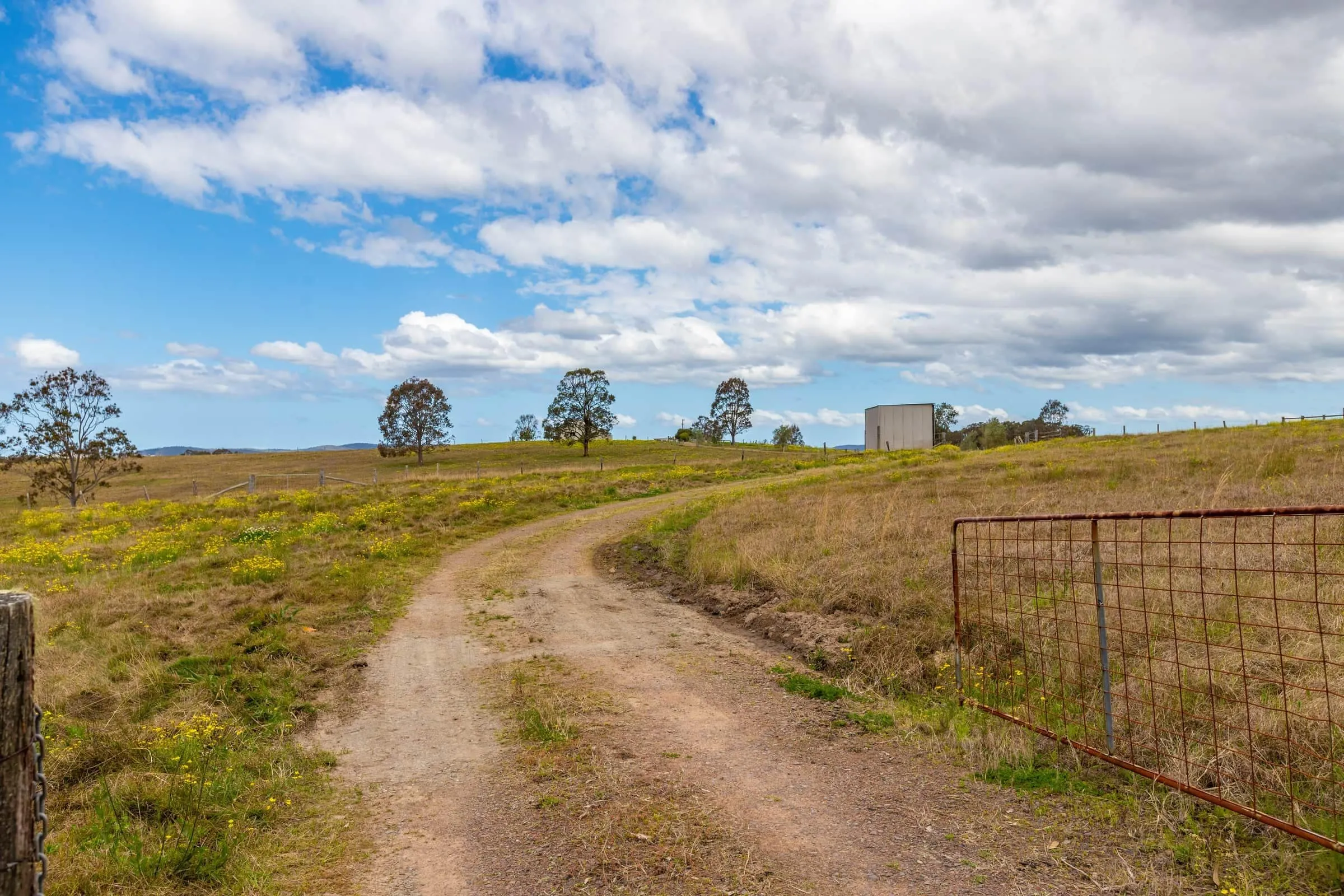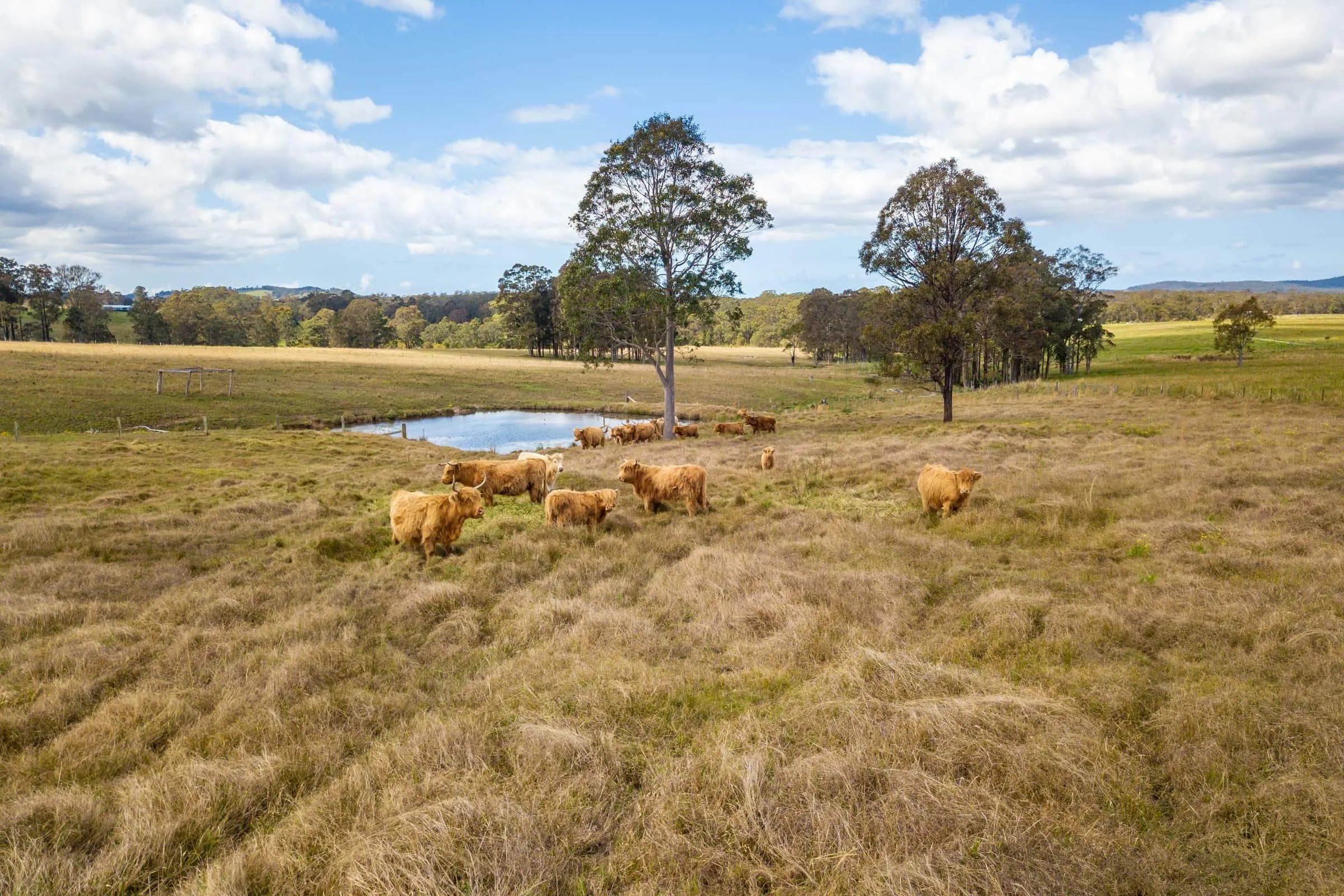
We have Highland cattle on the homepage and none in the paddock. That is not a marketing sleight of hand, or we hope it is not. It is a sequence, and this post is the working.
The shortlist
When we knew we would eventually run cattle here, we wrote down what the cattle were for. Not what breed we liked the look of. What job they had.
The job was three things. Graze the ridges and mid-slopes hard and briefly, then move, so the native grasses that came back during the rest get trampled, manured and left alone to seed. Do it without machinery or supplementary feed on 42 hectares of steep-ish, acidic, low-phosphorus country. And produce beef we would be proud to put on a plate and a label.
That job ruled out a lot of breeds quickly. Big-framed animals bred for feedlots need better grass than we have, and they need it every day. We looked seriously at three: Dexter, Lowline Angus, and Highland.
Dexters were the early favourite. Small, hardy, and dual-purpose, and we had already written a recipe or two around them in our heads. Lowlines are excellent on pasture and finish well. We visited a herd of each.
Why Highlands won
Three reasons, in order of how much they mattered.
They eat what is here. Highlands are browsers as much as grazers. Where an Angus stands in the good grass and waits for more, a Highland will work through blady grass, tussock, lantana regrowth and whatever else is on offer. On a property where the “weed” load is half the feed, that is not a nicety. It is the difference between a herd that needs hay in August and one that does not.
They are gentle on ground. Lighter than most beef breeds, so less compaction on a valley flat that is already the most compacted part of the property. The double coat means they do not need shade trees we do not have yet, and they cope with the winter valley frosts without complaint.
Slow beef. Highlands take longer to finish, 30 months or more against 18 to 24 for a commercial breed. That is a cost for a commercial operation and an advantage for us. Slow growth on diverse pasture is where the flavour is. We are not chasing volume; we are chasing the best steak in the Hunter, and a lean, fine-grained, deeply flavoured beef finished on native grass is what Highlands do.
The fourth reason is the horns and the fringe, and we are not too proud to admit it.
Why they are not here yet
We had a mob picked out, six heifers and a steer from a stud near Barrington. We were a phone call away.
Then we spent an afternoon on the valley flat with a spade and a penetrometer we borrowed from Local Land Services, and the numbers said no. Not yet.
The flat, which is the only paddock with year-round water and flat access, still has a compaction layer at 10 centimetres that the penetrometer could barely push through. The ridges have the grass, but the grass is only just starting to seed thickly. The fencing is alpaca fencing, which a Highland cow treats as a suggestion. The water system, as January taught us, was built for animals that drink a fifth as much.
Put cattle on now and we would set the pasture back two years to save one. We have seen people do exactly that. We did not buy this place to be a lesson for someone else’s blog.
The plan for the next year
So the sequence is fences, water, pasture, then cattle.
Winter goes to the fence lines. We are replacing the alpaca boundary with proper five-wire and putting in the first internal rotation paddocks on the ridge, eight of them, each around a hectare and a half.
Spring goes to pasture: the ridges get one more season of rest and seed, and the flat gets its cover crop and the first mob of something much smaller than a cow to start breaking up that layer. We are thinking chickens in a tractor.
Next autumn, if the fences are up and the grass has seeded, the first mob comes home. Six heifers, one steer, and a rotation plan that moves them every three to four days.
We will publish the pasture measurements before they arrive and after their first year. If they are not improving it, we will say so, and we will change something.
The horns can wait a year. The soil cannot.