It has taken a year to plant three rows. That is not because the planting is hard. It is because syntropic agroforestry is a system where the design does the work, and a bad design is very hard to undo once there are trees in it.
This week the design stopped being a drawing. Three rows, 30 metres each, on the gentle north-facing slope below the homestead. Ninety metres of what will, in ten years, be a forest you can eat.
The idea, in one paragraph
Ernst Götsch’s method, which we are following as closely as a pair of beginners in the Hunter can, plants a forest all at once, in dense rows, with every stage of succession in the ground on day one. Fast annuals and groundcovers cover the soil in weeks. Short-lived pioneers, bananas and pigeon pea, shade the soil and get cut back constantly to feed it. Medium trees come up under them. The canopy, eucalypts and big timber and nut trees, is planted at the same time and simply takes longer. The whole thing is pruned hard and often, and the prunings stay on the ground. You are farming succession, not plants.
We had read that sentence a hundred times. Planting it is different.
The design
The rows run on contour, roughly east-west, 5 metres apart. Between them is a 3-metre strip we sowed with oats and lupins as a chop-and-drop crop for the first year. The three rows are the trial. If it works, there is room for 25 more on this slope.
Each row is planted in three layers, all together, from tallest to shortest:
Emergent and canopy, every 6 metres. Spotted gum and a tallowwood for the long game, pecans and macadamias between them. Fifteen trees in total. They will look ridiculous next to the bananas for about four years.
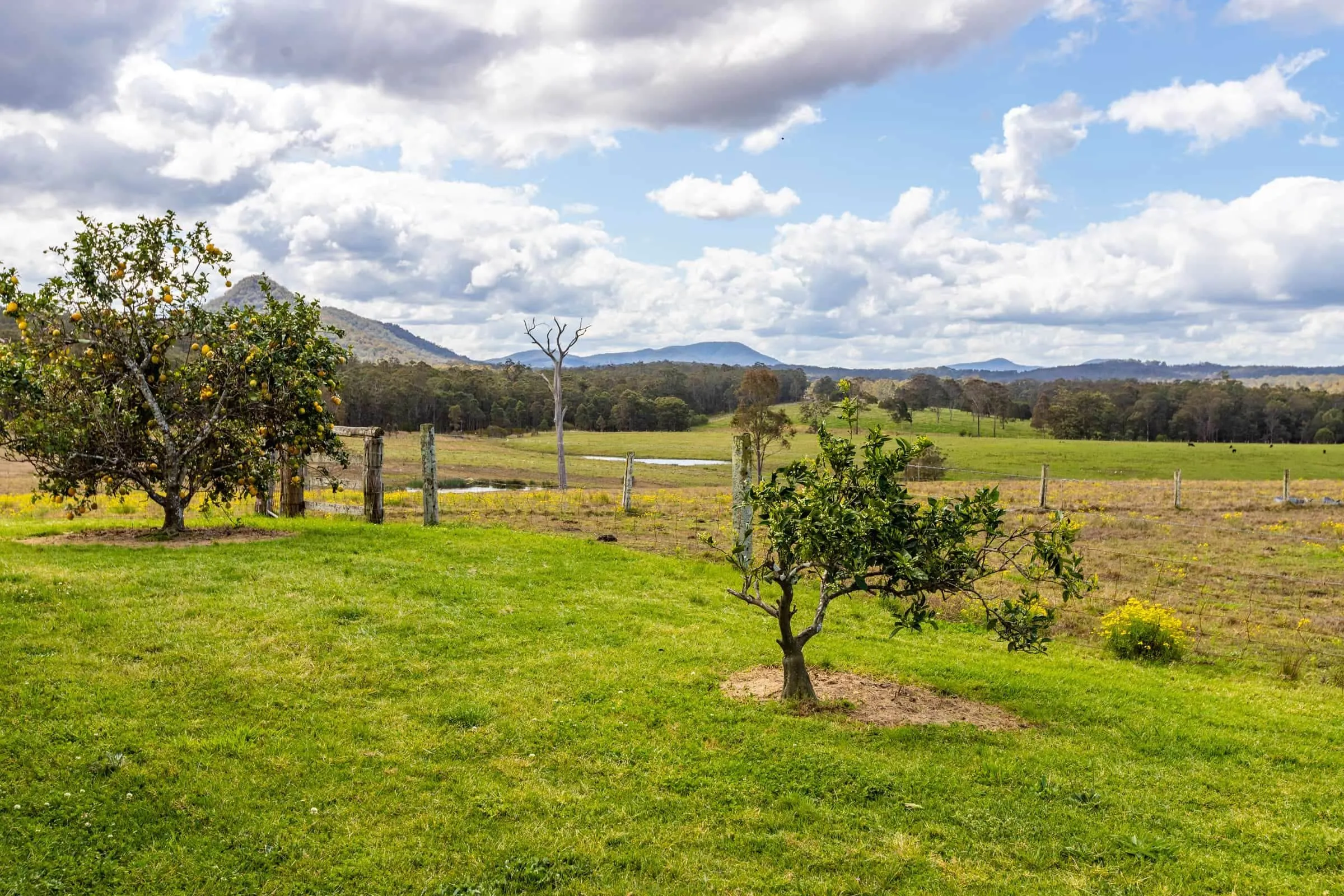
Medium, every 2 metres. Finger lime, Tahitian lime, a Meyer lemon, two avocados on the highest row where the drainage is best, mulberry, and Brazilian cherry. Forty-five trees.
Low and pioneer, every metre. Bananas, 30 of them, Ducasse and Lady Finger, which is a lot of banana for three families but they are here to be cut, not eaten. Pigeon pea between every banana as the nitrogen and biomass engine. Ninety plants in this layer.
Ground. Sweet potato cuttings about every 40 centimetres along the whole length. Roughly 200 of them, which is why the excerpt says unreasonable. Plus comfrey at the base of every canopy tree.
Total plants in the ground: 380 or so, in 90 metres of row. The density is the point. A normal orchard at this spacing would be about 20 trees.
The bit we are least sure about
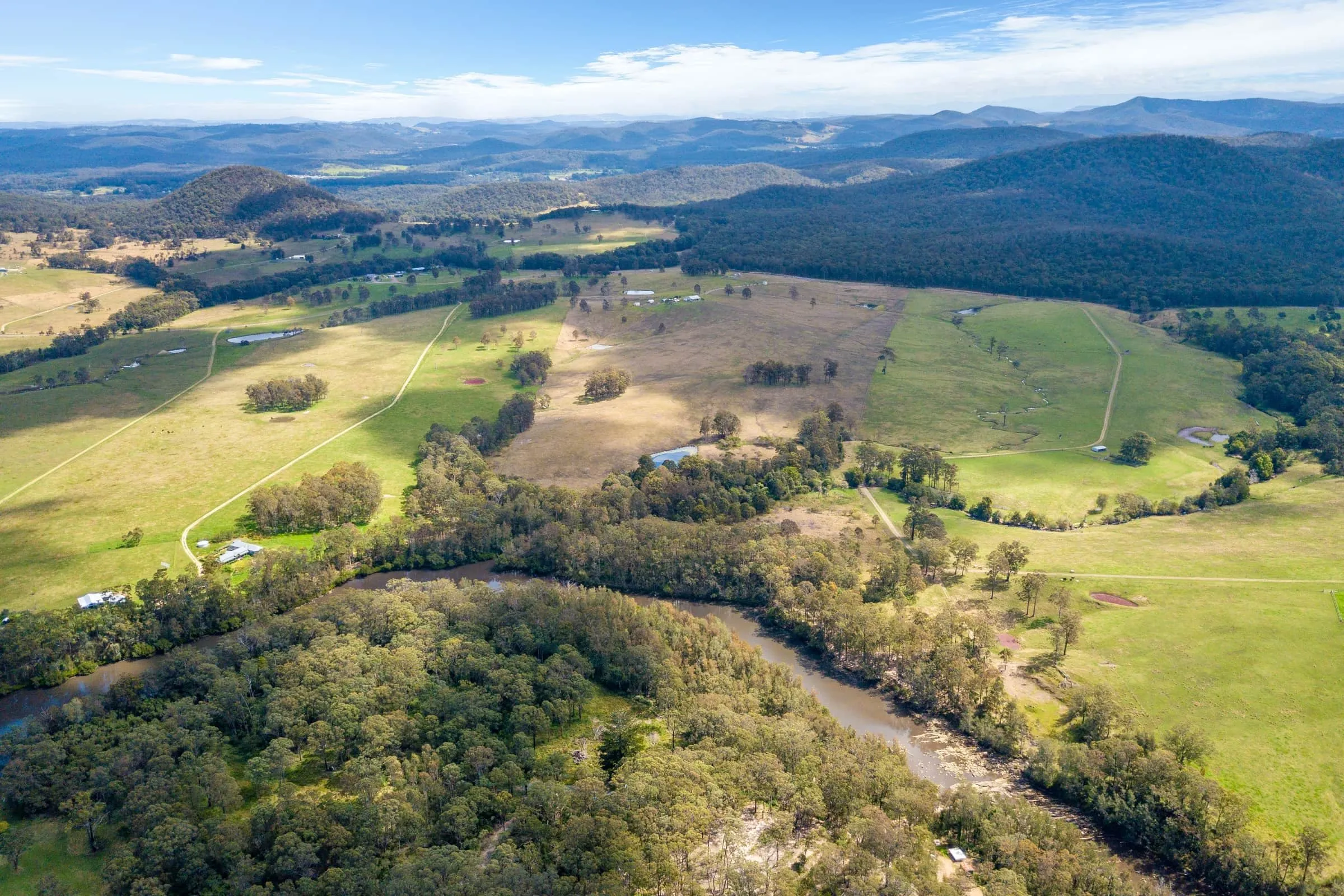
Frost. The slope is below the frost line we found in July, just. Bananas and avocados do not like a minus two morning, and we had three of them this winter. Götsch’s systems are mostly tropical and subtropical; the mid-north coast is the cool edge of where this works.
Our bet is that the density does the job. Dense pigeon pea and banana leaf create a canopy that holds a degree or two of warmth over the ground, and by the time the avocados are big enough to matter they will be under it. If we lose the bananas in the first winter we will replace them with something hardier and say so.
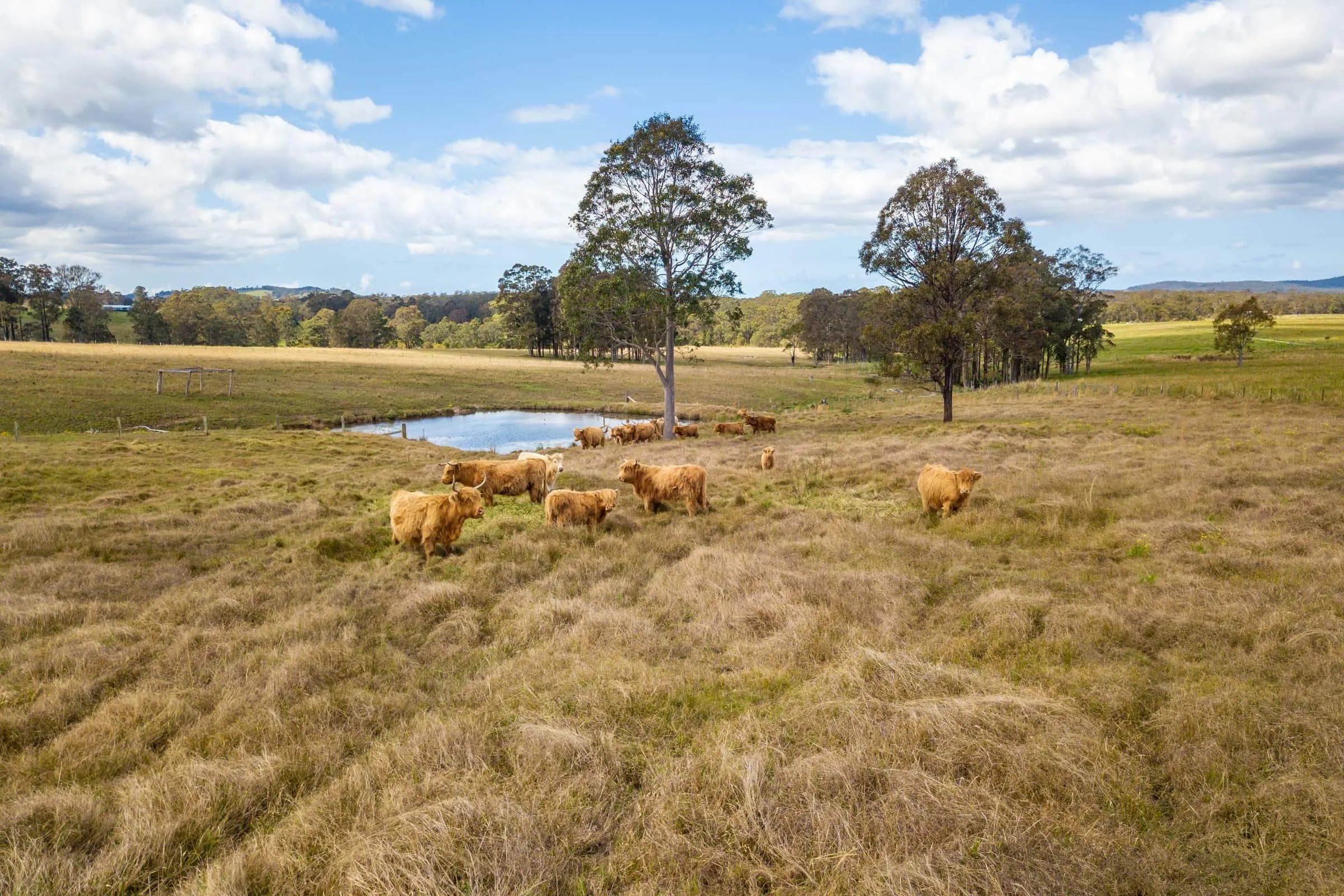
The other unknown is water. The rows are on the gravity line from the top dam, with drip tape under the mulch, and the January audit means we trust that line now. But if next summer is dry the top dam is feeding the cattle first.
What we will measure
The same things we measure everywhere, plus a few.
- Survival by species, counted at three months and twelve months.
- Height of the ten tagged canopy trees, every six months.
- Soil cores at the row and in the unplanted slope beside it, every two years, same lab as the December baseline.
- Biomass cut and dropped, estimated by the trailer-load, because nobody weighs pigeon pea prunings.
- First harvest dates. We are guessing sweet potato in March, bananas in eighteen months, citrus in three years, nuts in eight.
Why this, why here
The kitchen garden taught us that flavour is soil and time. The food forest is that lesson at the scale of a slope. It is also the thing that connects the two halves of Carinya Parc, the restoration up on the ridges and the river, and the food that comes off the place. In ten years, guests at the cottage should be able to walk 50 metres and pick their breakfast.
Three rows is a modest start for a six-acre plan. It is also 380 plants more than we had last week, on ground that has been grazed for a century. We planted the first line at 7am on Tuesday and the last sweet potato at 5pm, and then we sat on the verandah and looked at it for a long time.
It looks like three rows of very small plants and a lot of mulch. Come back in the spring of 2029.