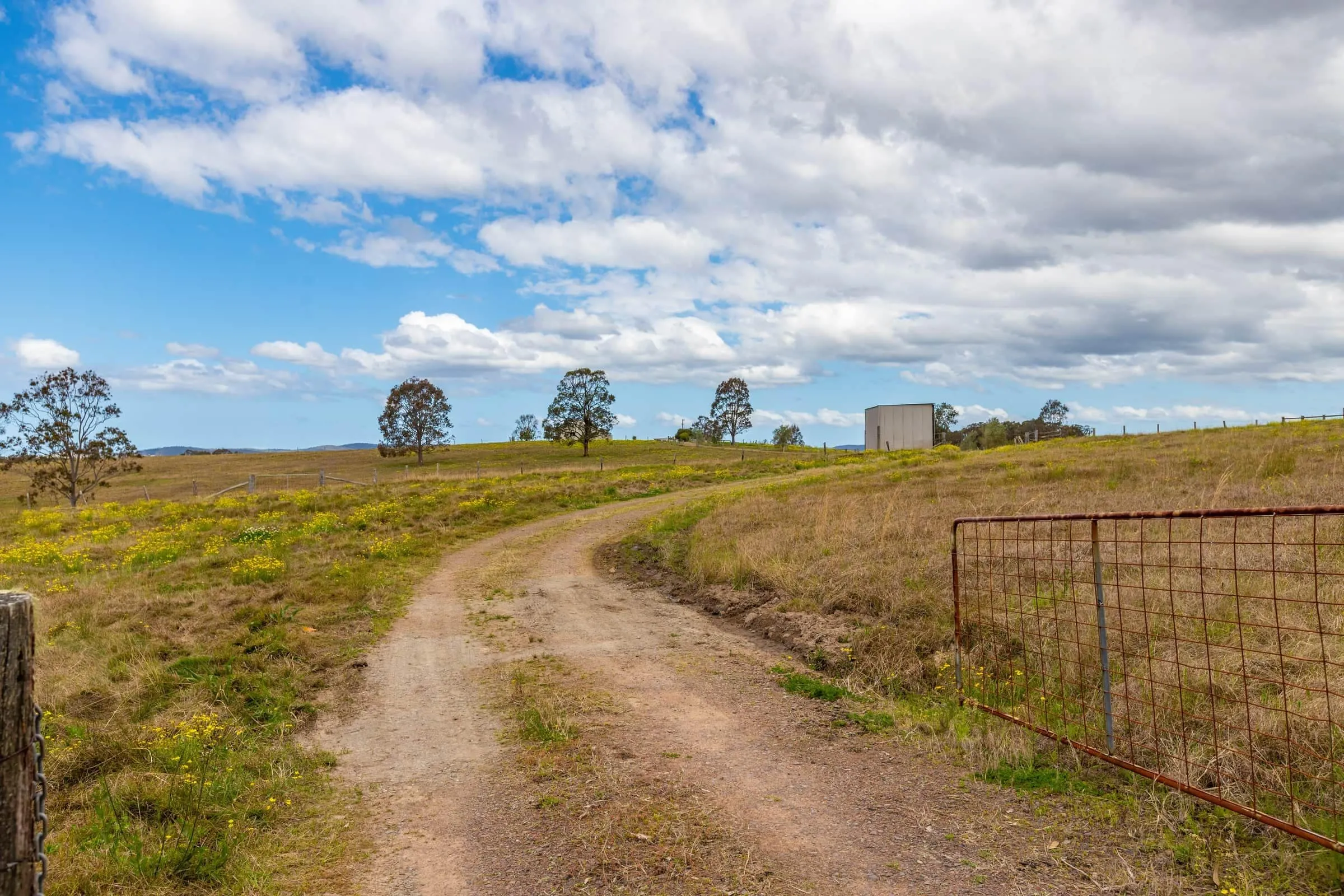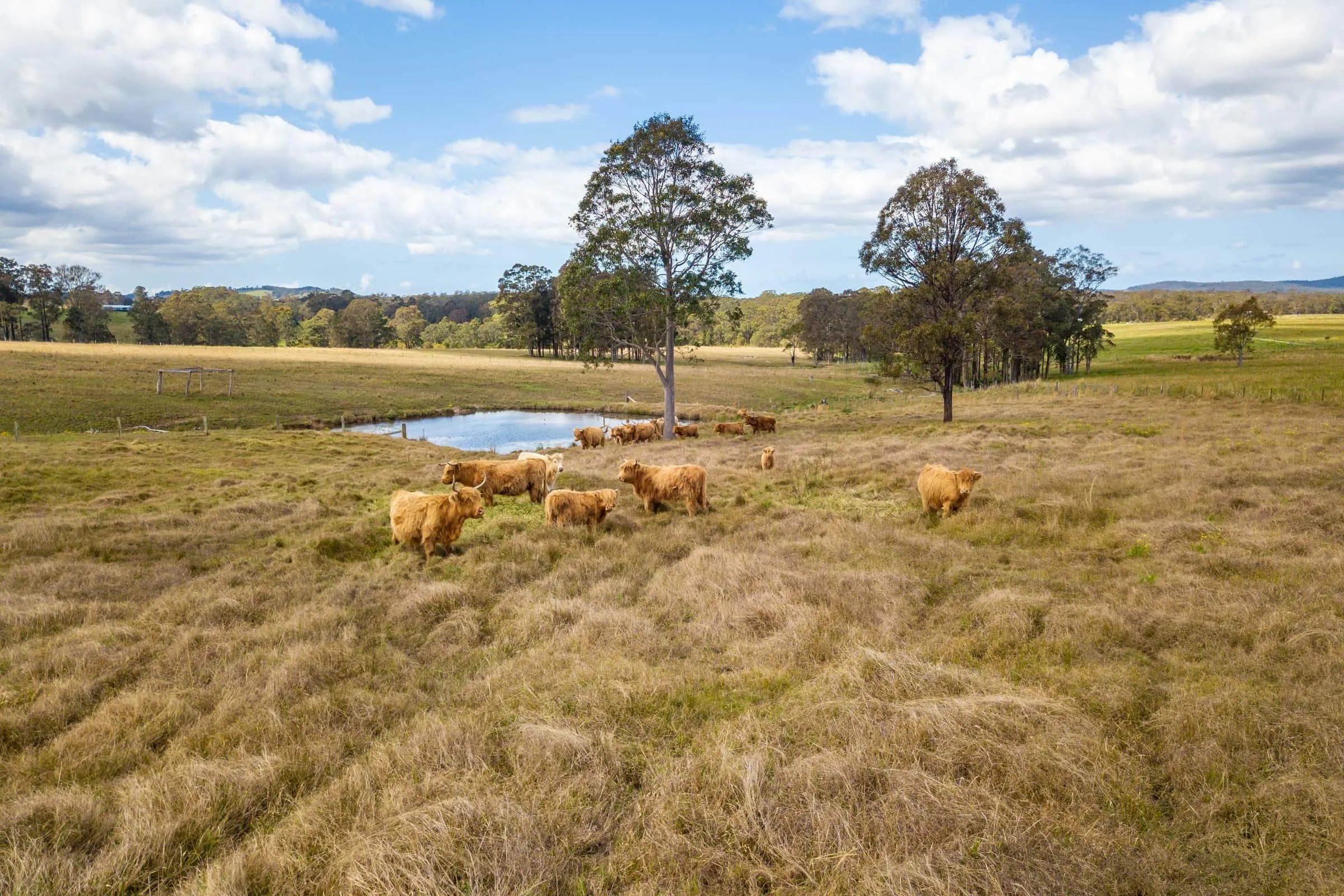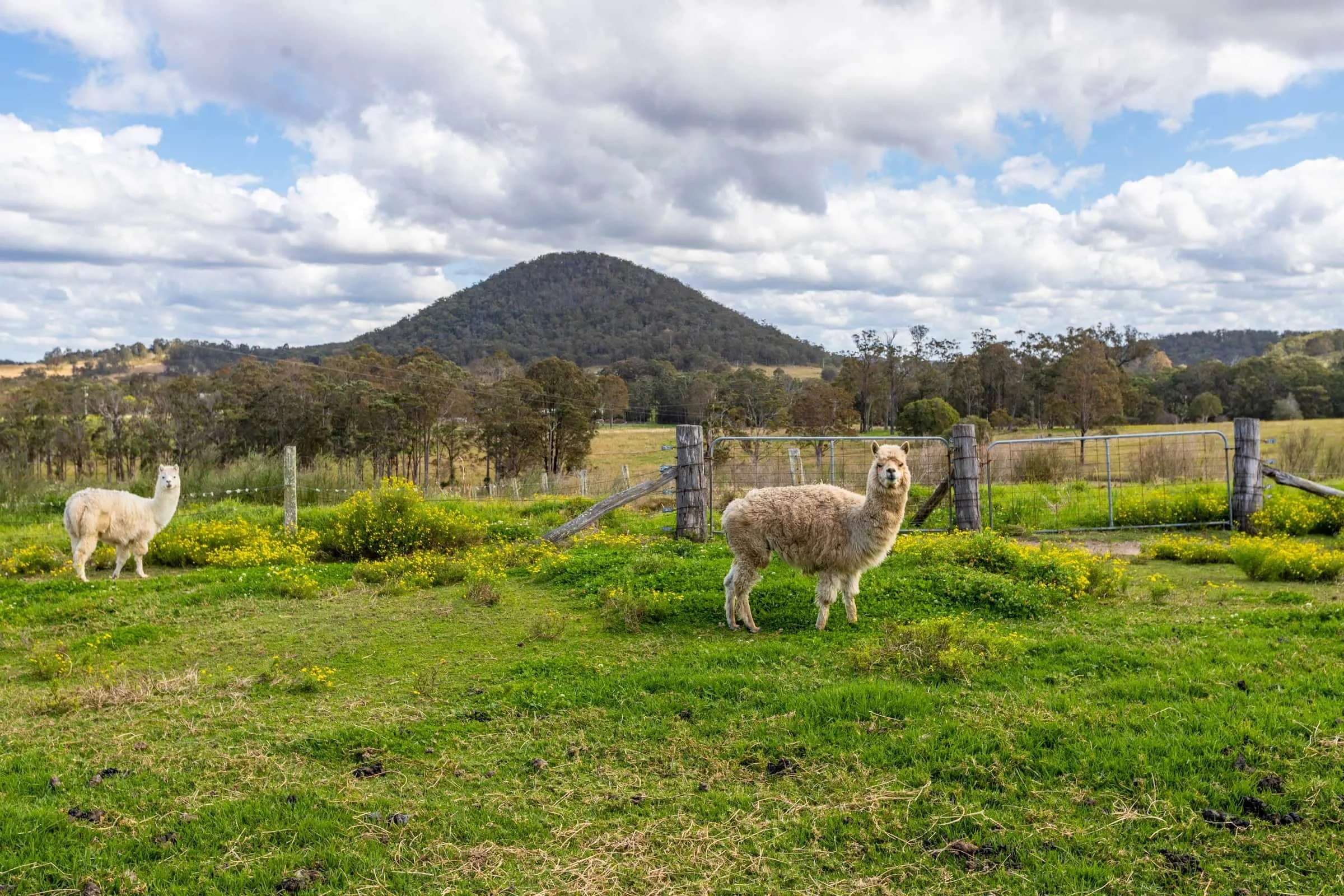
There is a photo we take every July from the top gate, looking down the ridge to the river, and every year someone sees it and says “you would never know it was winter”. They are right about the colour. The mid-north coast does green in July. Cool nights, steady moisture, low evaporation, and the grass keeps ticking over.
What the photo does not show is what the green is made of. That is what we spent the last fortnight working out.
The method
Nothing clever. A one-metre-square quadrat made from four bits of poly pipe, a notebook, and 30 spots chosen in December and marked with a star picket so we do the same ones every time.
At each spot we recorded which species were present, a rough percentage of ground cover, how much bare soil, and how much litter. We photographed each one straight down. Then we did the thing that matters most and pushed a spade in.
Thirty quadrats across 42 hectares is thin. It is what two people can do in a fortnight around fencing, and it is thirty more than we had.
The ridges
The north-facing ridge is the best country on the property and the winter confirmed it. Ground cover between 85% and 95%. Kangaroo grass, weeping grass and wallaby grass together made up more than half the cover in 8 of the 10 ridge quadrats, which is a number that would have been unthinkable under the alpacas. Bare soil under 5%. The spade goes in to the handle.
The ridge grass is not growing much in July, but it is standing, and the litter layer under it is the thickest it has been. That litter is next spring’s soil.
The south-facing slope is a different story. Cover is still good, around 80%, but it is mostly kikuyu and carpet grass, with the natives hanging on in patches. Frost sits on that slope until ten in the morning. It will regenerate, but slower, and we will graze it last.
The flat
The valley flat remains the problem child, and winter has not changed that.
Cover is around 60% and most of it is fireweed, flatweed and the annual grasses that came up on the February silt. The silt itself has done something: the top 10 centimetres are soft and rooted. Below that, the old compaction is exactly where it was. The spade stops at the same place it stopped in December.
We put the oat and vetch cover crop in on the flat in late April. It came up well on the silt, patchily elsewhere, and is now about 30 centimetres tall. The plan is to let it seed in spring and then either graze it hard with something small or roll it and plant straight into it.
The frost line is the other thing the flat taught us. On a clear morning in July the frost runs from the river to a line about 15 metres below the shed, then stops dead. Above that line, nothing. That line is where the winter paddock boundary will go.
What this means for the cattle
We said in May the mob would come home next autumn if the pasture said yes. Winter has said yes on the ridges, not yet on the flat, and probably on the south slope.
So the first rotation will be eight paddocks on the north ridge only, and the herd will not touch the flat in its first year. That is roughly 12 hectares of the 42 in the first rotation. Small. Correct.
We will do the quadrats again in October, before the spring flush, and again in April right before the cattle arrive. Same pickets, same method. The numbers go on this site either way.
One more thing the winter did
The July rain filled the middle dam for the first time since we have owned the place, silt and all. The frogs were audible from the shed. It had been a long time since that dam was full, and the neighbour who told us it had been silting since 2009 came over to look at it.
Green paddocks in winter are a signal, not a promise. This year the signal is good. We are trying very hard not to get ahead of it.