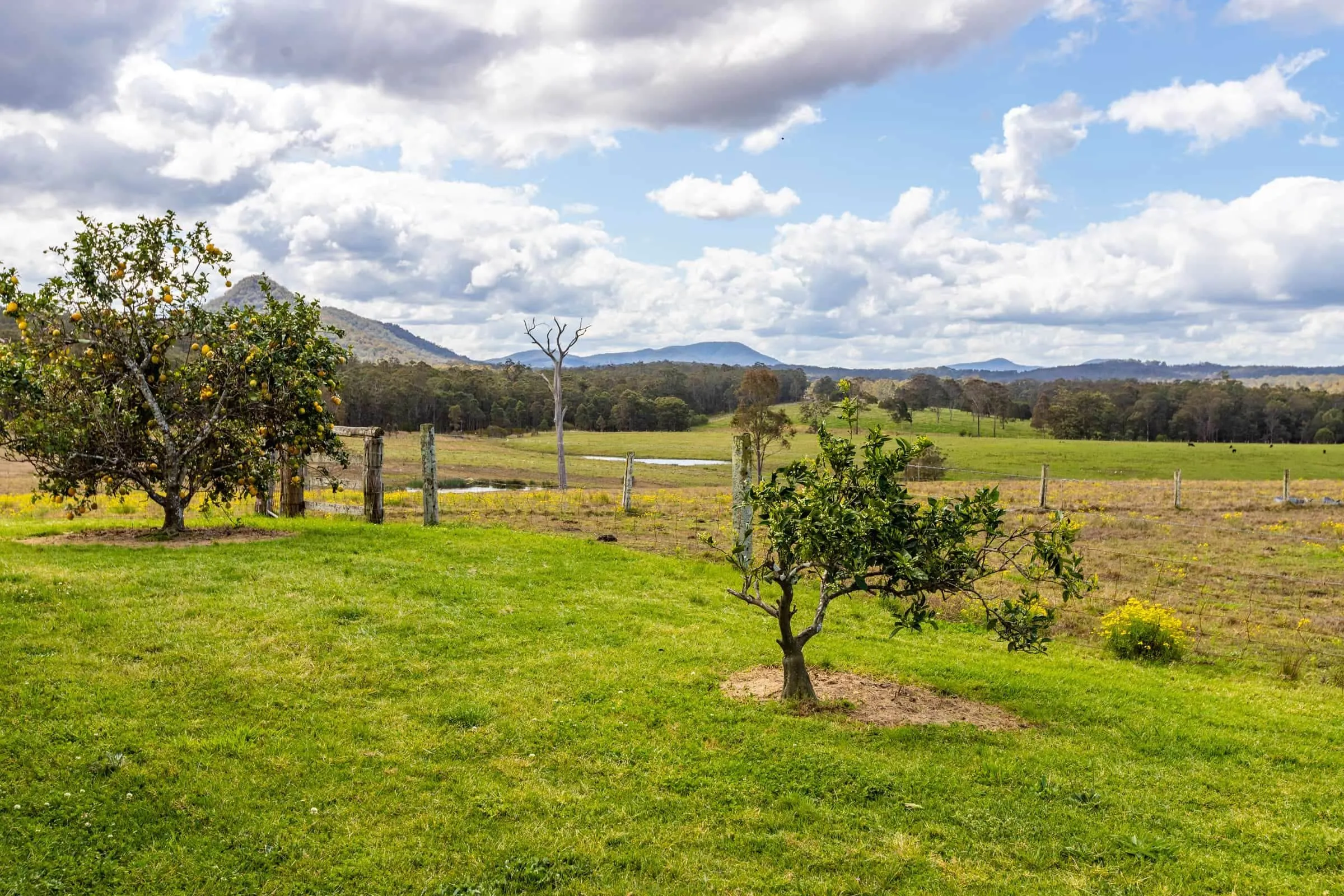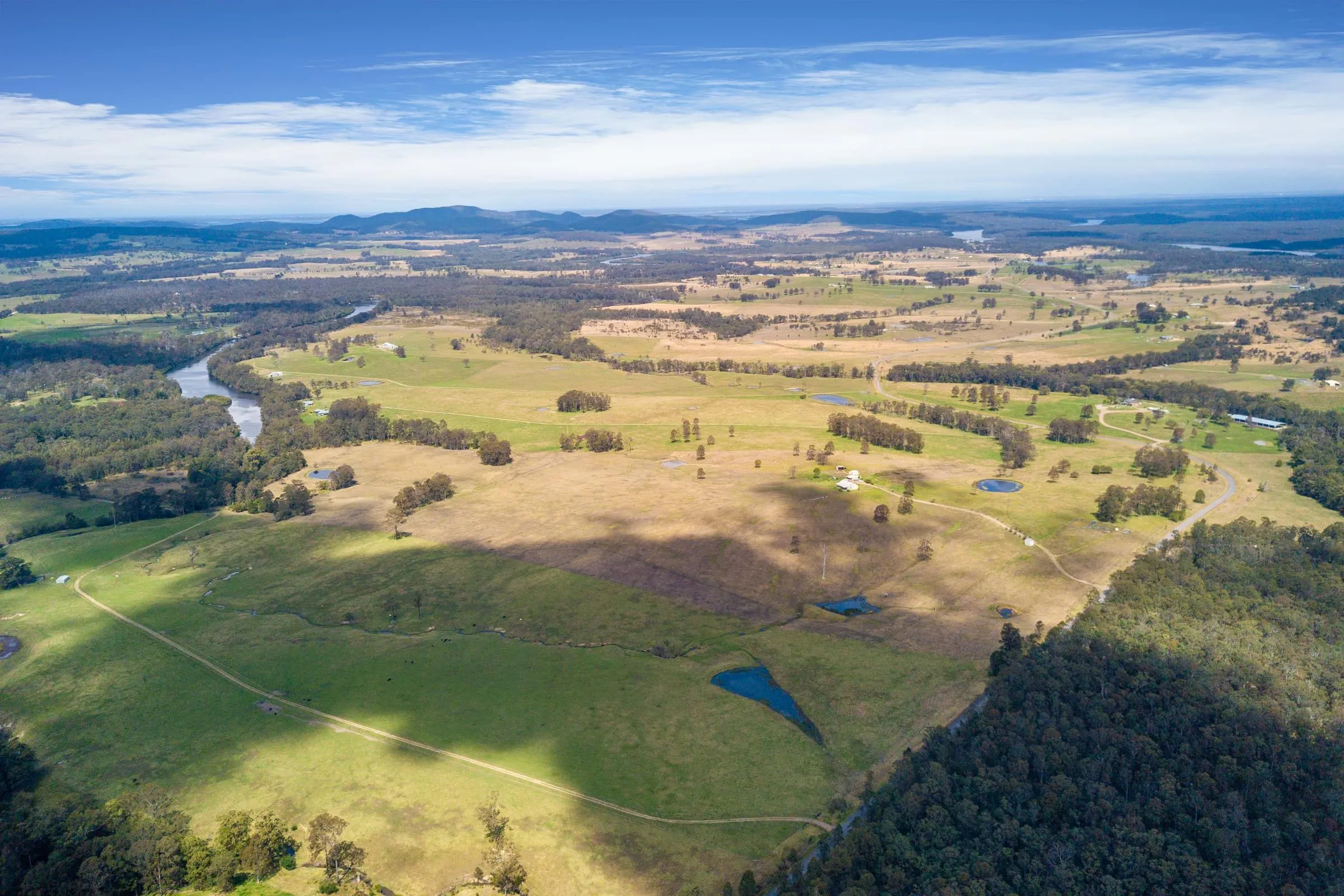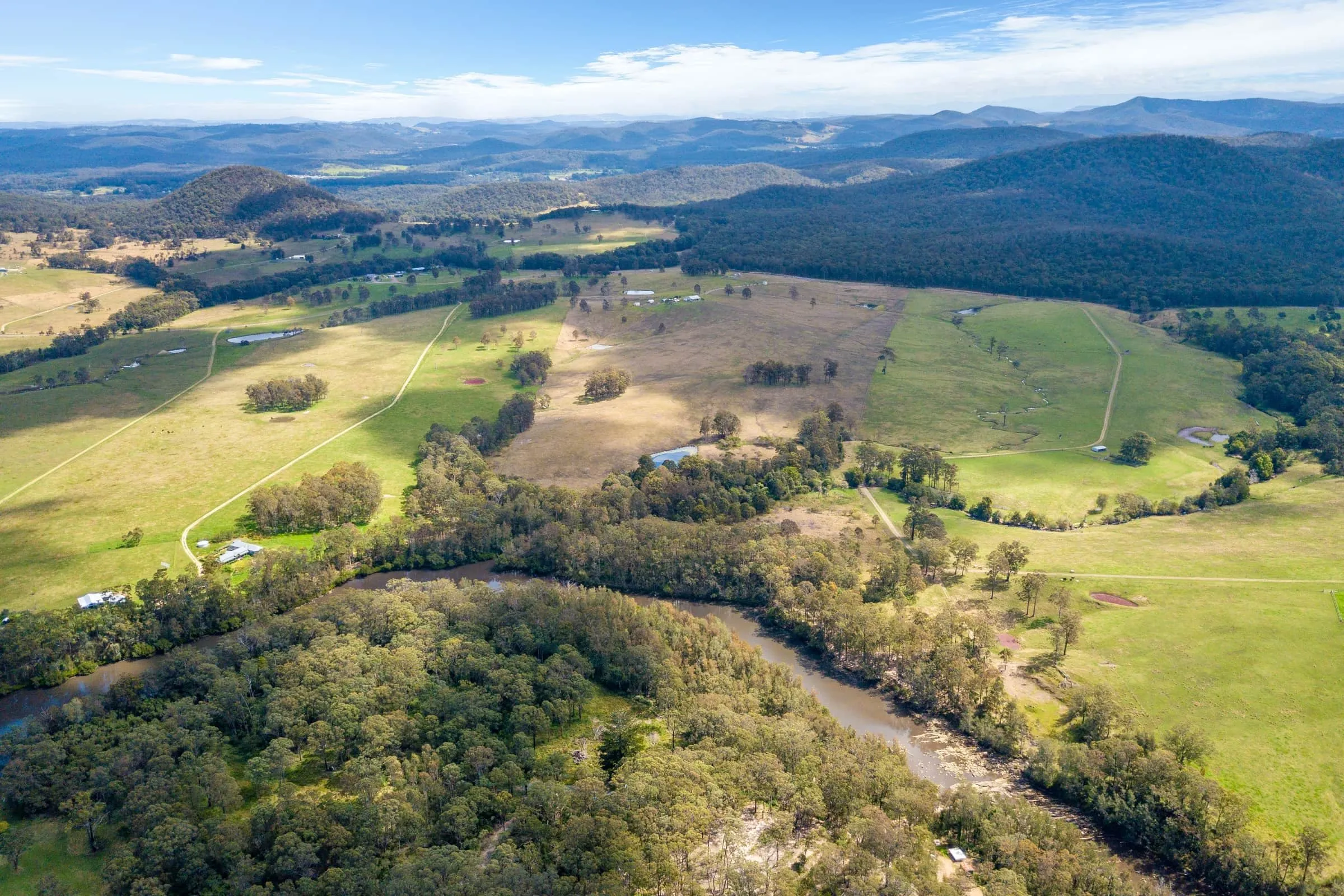
We put it on the site, we put it on the noticeboard outside the Stroud bakery, and we told the neighbours. We thought maybe ten people would come. Twenty-six did, including two we had never met who drove up from Newcastle because they read the February post about the river.
That is the headline for us. Not the trees. The gate opened and people walked through it.
The site
The 40 metres of riverbank that the February flood took, plus about 80 metres either side of it that we knew would go next. A crescent of bare, slumping bank on the outside of the bend, and a shelf of fresh silt on the inside.
We had spent the week before doing the boring part: spraying out a strip of kikuyu along the top of the bank, laying the three logs the river gave us along the base of the eroded face, and pegging out planting lines with string and bamboo stakes at 1.5-metre spacing. By the time people arrived, every hole had a stake next to it. That was the single best decision of the day.
The order
We bought 1,200 tubestock from a native nursery near Gloucester. All local provenance, which we care about more than we expected to.
- 300 swamp oak (Casuarina glauca) for the toe of the bank
- 250 lomandra for the same, in between the oaks
- 200 river she-oak
- 150 forest red gum
- 150 river red gum, for the flat above
- 150 mixed wattles, mostly Acacia floribunda and A. maidenii, as the fast nurse crop
About fifty of the tubes were too small or root-bound to plant, and we held them back. Hence 1,150.
How the day ran
Eight o’clock: tea, a safety talk, and the honest warning that this is snake country in April. Three teams, each with someone who had planted before. One team on holes with the Hamilton planters, one on tubes, one on guards and stakes behind them.
We had a planting rhythm going by nine. A crew of three could do a tree in under a minute once the holes were in.
Eleven o’clock: a 1.2-metre eastern brown crossed the silt shelf about 10 metres from the tube team, took one look at 26 humans, and went back the way it came. Planting stopped for ten minutes. Nobody left. The two from Newcastle took a photo.
One o’clock: lunch on the flat. We had made a very large pot of the winter stew from the recipes page, which in April is pushing the season a bit, and bread from the homestead oven. It ran out.
Three o’clock: last guard on, last stake in, 1,150 trees along 200 metres of river.
What we got wrong
Not enough water on the day. We had a fire cart tank and a hose from the river, and we still only got a proper watering onto about two-thirds of the trees before dark. The rest got theirs the next morning, which is probably fine, and might not be.
Guards. We bought 800 and needed 1,150. The last 350 trees, up on the flat, went in without them. The wallabies found those within a week. About a third of the unguarded wattles are now stumps. We have ordered the rest of the guards and the wattles will likely shoot again, but that was money spent on tubestock to feed macropods.
We should have had a second planter for the clay. The bank soil is heavy, and the two Hamiltons were the bottleneck all morning.
How we will know if it worked
We are not going to say the bank is stabilised. It is not. It is a bank with 1,150 very small plants in it.
What we have done is tagged every tenth tree with a numbered aluminium tag, 115 of them, and recorded species and position. We will count those tags in October, in April next year, and every April after that. Survival rate goes on this site whether it is 90% or 40%.
We have also re-shot the three photo points that cover the bend. Same bearings as December.
If the trees make it through their first summer, the roots will be where the February flood found none. That is the whole job.
Thank you
To the 26. To the nursery for talking us out of two species that would not have made it. To the bakery for the noticeboard. And to the brown snake, for the timing.
The next one is in spring. The gate is open.